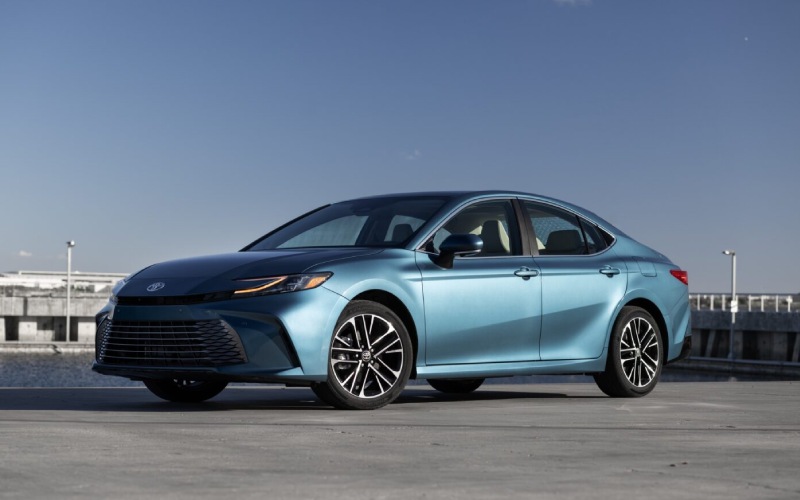
Toyota of Kirkland - Which sedan offers better all-weather confidence for Seattle, WA drivers — the 2026 Toyota Camry or the 2026 Honda Accord?
Comparing two respected midsize sedans on a single question can bring immense clarity. For Seattle, WA drivers who juggle steep urban hills, wet pavement for much of the year, and quick merges onto I-5 or the West Seattle Bridge, the question is straightforward: Which offers better all-weather confidence, the 2026 Toyota Camry or the 2026 Honda Accord? The short answer is that the Camry’s available Electronic On-Demand All-Wheel Drive (AWD), paired with its standard hybrid power across every trim, creates a more predictable and confident feel when conditions turn slick. The Accord hybrid provides reassuring balance and strong driver-assist technology, but it remains front-wheel drive only. If traction and consistency matter most, the Camry holds a meaningful advantage.
Underfoot, it’s about how power is delivered and where it goes. The Camry’s system can proactively send torque to the rear wheels when the front tires start to slip, which helps during rainy-day starts on Queen Anne Avenue or when cresting a damp on-ramp to SR 99. At the same time, Toyota’s hybrid tuning smooths out throttle inputs as traffic ebbs and flows, so drivers sense less drama and more control. The Accord hybrid counters with crisp, immediate torque and refined road manners. Yet without AWD, its front tires must both steer and transfer power. On greasy surfaces or paint-striped crosswalks, that one-axle workload can be felt through the wheel. In everyday Seattle driving, the Camry’s traction advantage can reduce the moment-to-moment corrections a driver makes and translate into a calmer commute.
How the systems feel on real Seattle roads
Hybrid powertrains from Toyota and Honda both excel at quiet starts and efficient, relaxed cruising. The Camry’s four selectable drive modes—Normal, Sport, Eco, and EV Mode—make it simple to tailor the response for neighborhood streets, freeway stretches, and everything between. EV Mode supports short, electric-only operation at low speeds, a boon for rolling silently through dense residential streets around Capitol Hill at early hours. The Accord hybrid adds an Individual mode to its 4-Mode Drive System, which lets drivers customize steering and gauge behavior—handy for those who like to fine-tune. Where the Camry creates a gap is in that added rear-axle traction when rain and road grime conspire at once.
Stopping and steering confidence also play a role in bad weather. Both sedans blend regenerative and friction braking for consistent pedal feel, but AWD can help the Camry settle sooner in mid-corner corrections. On a downhill section of Denny Way during a downpour, that extra stability can make a difference in driver effort. Honda’s chassis tuning remains impressive for poise and comfort, especially on the hybrid trims. Yet the Camry’s chassis calibration and available AWD complement each other, creating a “just-right” feel that resonates in everyday driving across Seattle neighborhoods with varying pavement quality.
Technology that supports tough-weather driving
Confidence isn’t only mechanical. It’s also about reducing cognitive load. The Camry’s available 12.3-inch Digital Gauge Cluster and optional Head-Up Display present information where it’s easier to use at a glance, and Toyota Safety Sense™ 3.0 builds in capabilities like Lane Tracing Assist, Dynamic Radar Cruise Control, and Traffic Jam Assist. The Accord leverages an extra-wide 12.3-inch touch-screen on hybrid trims and equips Honda Sensing®, including Collision Mitigation Braking System™ (CMBS™), Adaptive Cruise Control with Low-Speed Follow, and Lane Keeping Assist System with Traffic Jam Assist. Both approaches are robust; both can dial down stress on clogged sections of I-5. The distinction again returns to traction—tech helps you avoid trouble, but when you find it, AWD can help you power through more cleanly.
Key takeaways for Seattle drivers
- All-weather traction: The Camry’s available Electronic On-Demand AWD adds rear-axle torque when front slip is detected, improving confidence on rain-soaked starts and steep hills.
- Hybrid consistency: Every Camry is hybrid, so smooth low-speed control, quiet operation, and strong takeoff feel are standard across the lineup.
- Driver assistance and visibility: Both sedans offer advanced suites; Camry’s available Head-Up Display and big Digital Gauge Cluster help keep eyes forward when traffic compresses.
From a day-to-day perspective, having AWD in your back pocket is like carrying an umbrella you know works. You won’t feel it all the time—just when you need it most. For many Seattle shoppers, that’s reason enough to prioritize the 2026 Toyota Camry.
Who benefits most from Camry AWD?
If your regular route includes steep garage ramps, wet cobblestones in historic districts, or uneven patches on Aurora Avenue, the Camry’s AWD can reduce wheelspin and cut down on traction control interventions. Households that share a car among drivers with varying experience levels also appreciate the added buffer. And for those weekend trips to Discovery Park or a rainy-day loop to Alki Beach, AWD adds peace of mind when shoulders collect standing water or sand.
For drivers focused exclusively on dry, predictable road surfaces, the Accord hybrid remains a compelling, efficient FWD choice with excellent active safety. However, Seattle weather is rarely predictable. That is why Toyota of Kirkland sees many shoppers gravitate toward the Camry’s available AWD as the smarter long-term solution—balanced, surefooted, and always ready.
Frequently Asked Questions:
Does the 2026 Honda Accord offer all-wheel drive?
No. The 2026 Honda Accord is front-wheel drive only, including its hybrid trims.
Is all-wheel drive available on every 2026 Toyota Camry trim?
AWD is available on select trims of the 2026 Toyota Camry. Because every Camry is a hybrid, the AWD system integrates seamlessly with the hybrid powertrain for smooth, confident takeoffs.
Do both sedans include advanced driver assistance features?
Yes. Camry equips Toyota Safety Sense™ 3.0; Accord equips Honda Sensing®. Both suites include capabilities like adaptive cruise control, lane centering assistance, and front-collision mitigation features.
How does AWD change everyday driving in Seattle?
AWD can reduce front-wheel slip on wet starts, help the car settle more quickly over uneven surfaces, and support more stable acceleration when lanes are shiny with rain or painted markings.
Next steps
Choosing between the Camry and Accord often comes down to priorities. If all-weather stability and consistent hybrid performance top the list, start your test drive with the Camry’s AWD grades. If you are exploring multiple use cases or want to compare tech features side by side, our showroom team—serving Bellevue, Redmond, and Seattle—can walk you through displays, safety features, and trim-specific equipment so you can make a confident, well-informed decision.
Request more 2026 Toyota Camry information
Categories:
Toyota Camry