
For Kirkland drivers who want strong fuel economy, useful cargo room, and more hybrid horsepower, the Toyota RAV4 Hybrid is our pick over the Honda CR-V Hybrid. Toyota of Kirkland, whose parent dealer group is O'Brien Auto Group, can help you explore the Toyota trims that fit your commute and weekend plans. The Honda makes a strong case for rear-seat legroom, but the redesigned RAV4 brings several advantages worth a closer look.
Key Takeaways
- The RAV4 LE with front-wheel drive earns 43 mpg combined, compared with 40 mpg for the CR-V Sport Hybrid.
- The RAV4 XLE Premium provides more cargo room behind the rear seats than the CR-V Sport-L Hybrid.
- The CR-V Hybrid offers more rear-seat legroom, while both SUVs seat five.
- The RAV4 Hybrid produces more total system horsepower with either front-wheel drive or all-wheel drive.
Hybrid Fuel Economy for Kirkland Commutes
The RAV4, now exclusively a hybrid, has the fuel-economy advantage in comparable front-wheel-drive and mainstream all-wheel-drive configurations. Because Toyota redesigned the RAV4 for 2026, the figures here compare that generation with the current 2027 CR-V Hybrid rather than mixing in specifications from the previous Toyota.
With front-wheel drive, the RAV4 LE earns EPA-estimated ratings of 47 mpg city, 40 highway, and 43 combined. The front-wheel-drive CR-V Sport Hybrid earns 43 mpg city, 36 highway, and 40 combined. Toyota’s advantage covers both city streets and highway driving, which makes it relevant whether your week stays in Kirkland or includes regular trips to Bellevue.
For an all-wheel-drive comparison, the RAV4 XLE Premium earns 45 mpg city, 38 highway, and 41 combined. The CR-V Sport-L Hybrid with all-wheel drive earns 40 mpg city, 34 highway, and 37 combined. Those ratings give the Toyota a clear efficiency advantage without asking you to give up the traction benefits of an equipped model.
Neither conventional hybrid needs to be plugged in. Both combine a gasoline engine with electric motors, and their batteries recharge through driving and regenerative braking, which recovers energy as the vehicle slows.
AWD Systems and Hybrid Power
The RAV4 delivers more horsepower, and its available all-wheel-drive system uses a dedicated rear electric motor. Electronic On-Demand All-Wheel Drive, Toyota’s system for supplying power to the rear wheels when needed, adds rear-wheel assistance without a conventional front-to-rear driveshaft.
Honda’s Real Time AWD with Intelligent Control System, an available system that automatically distributes power to the rear wheels as conditions require, uses a mechanical connection to drive the rear axle. Real Time AWD with Intelligent Control System is available on the CR-V Sport Hybrid and Sport-L Hybrid and standard on the TrailSport Hybrid and Sport Touring Hybrid.
The RAV4 produces 226 net combined horsepower with front-wheel drive or 236 with Electronic On-Demand All-Wheel Drive. The CR-V Hybrid produces 204 total system horsepower with either drivetrain. That gives the Toyota more power on paper for highway merging and acceleration.
For drivers comparing AWD vehicles in the Pacific Northwest, the RAV4 combines that extra output with competitive efficiency. Electronic On-Demand All-Wheel Drive helps manage traction, but tires and road conditions still affect how the vehicle responds.
Cargo Space With the Rear Seats Up or Folded
The RAV4 XLE Premium gives you more published cargo volume behind the rear seats, while the CR-V Sport-L Hybrid has a slightly larger maximum with those seats folded.
The RAV4 XLE Premium provides 37.8 cubic feet behind the second row and up to 70.4 cubic feet with the rear seats folded. The CR-V Sport-L Hybrid provides 36.3 cubic feet behind the second row and up to 71.8 cubic feet with the rear seats folded. Toyota’s advantage is in the configuration you use when passengers occupy both rows.
Both SUVs have split-folding rear seatbacks, so you can carry longer items while keeping part of the back seat available. For a Kirkland household using one vehicle for commuting, errands, and weekend outings, that flexibility is useful without moving into a larger SUV.
If the RAV4 XLE Premium sounds like the right balance, browse our current selection at Toyota of Kirkland to see which equipped models are available.
Passenger Space and Rear-Seat Comfort
The CR-V Hybrid offers more rear-seat legroom, while both SUVs have two rows and seating for five. Honda publishes 41.0 inches of rear legroom, compared with 37.8 inches in the RAV4.
That difference makes the Honda worth considering if tall adults regularly ride in back. The Toyota counters with 39.5 inches of published rear headroom, compared with 38.2 inches in the Honda’s hybrid trims.
Up front, the measurements are close: the RAV4 provides 41.0 inches of legroom, while the CR-V provides 41.3 inches. Neither has a third row, so the decision is about how you use the second row and cargo area, not whether you need extra seating positions.
For a Redmond commute with an occasional rear passenger, we would lean toward the RAV4’s combination of efficiency and everyday cargo room. Households regularly carrying taller passengers in back may put more weight on Honda’s additional legroom.
Comparing Trims and Standard Equipment
The RAV4 XLE Premium and CR-V Sport-L Hybrid make a useful comparison because both add comfort and convenience beyond their entry hybrid trims.
The RAV4 XLE Premium includes SofTex-trimmed seats, Toyota’s synthetic upholstery, along with heated front seats and a height-adjustable power liftgate. The CR-V Sport-L Hybrid includes leather-trimmed seats, heated front seats, and a power tailgate. Both offer a more equipped cabin without requiring the top trim.
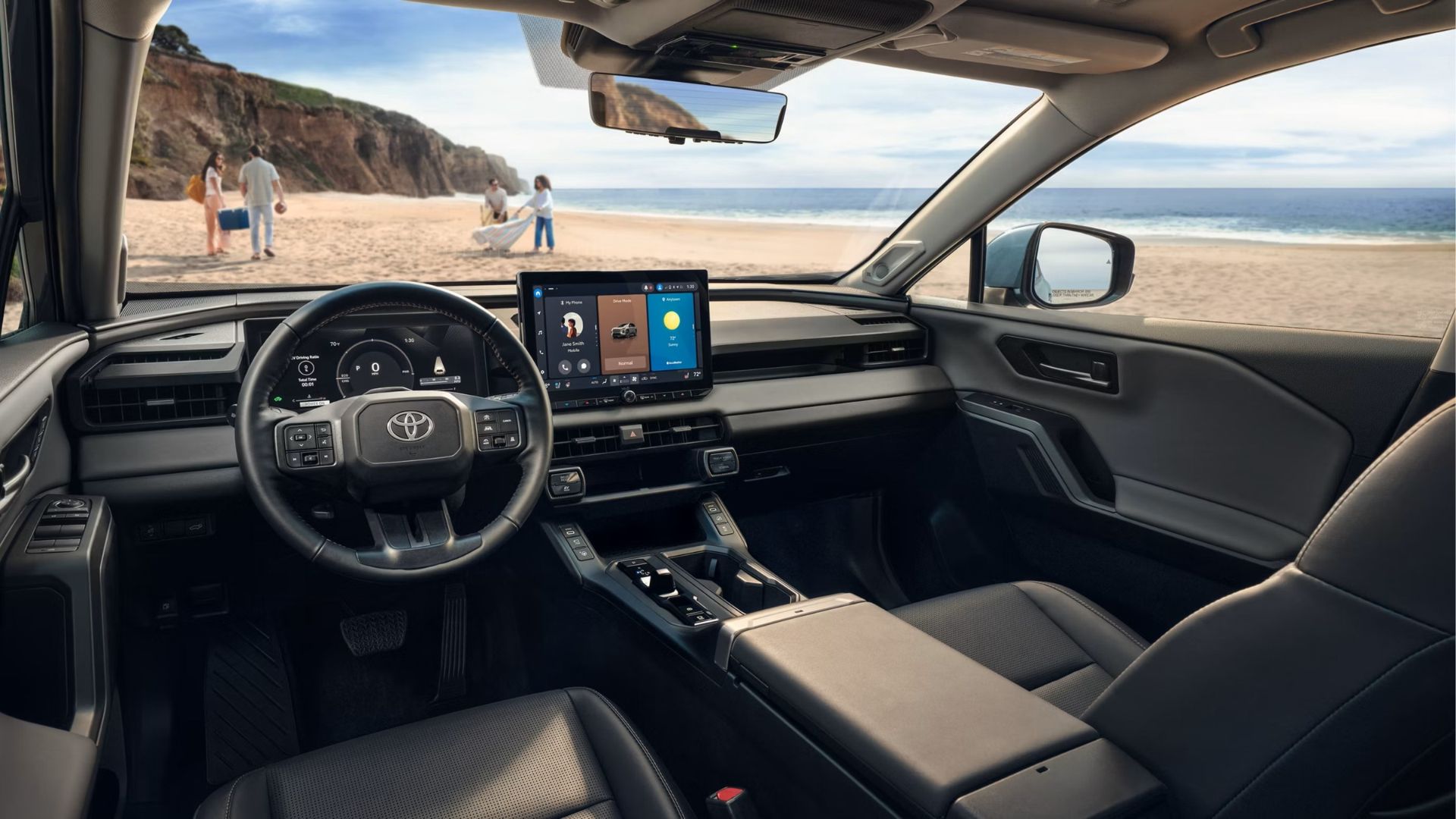
The RAV4 also includes a standard 12.3-inch digital gauge cluster. Toyota Audio Multimedia, Toyota’s touchscreen infotainment system, provides a standard 10.5-inch display on the XLE Premium with wireless Apple CarPlay and Android Auto compatibility.
Toyota Safety Sense 4.0, Toyota’s suite of driver-assistance technologies, comes standard on the RAV4. Honda Sensing, Honda’s suite of safety and driver-assistance technologies, comes standard on the CR-V. Our team can walk you through the RAV4’s controls and standard equipment so you can see how the trim fits your daily drive.

Test Drive a RAV4 Hybrid in Kirkland
The RAV4 is our recommendation for shoppers who prioritize fuel efficiency, stronger hybrid output, and cargo room with the rear seats occupied. Visit Toyota of Kirkland in Kirkland, part of the O'Brien Auto Group, to test drive an available RAV4 from our current selection.
*Penned by AI, polished by humans
Categories:
Toyota of Kirkland