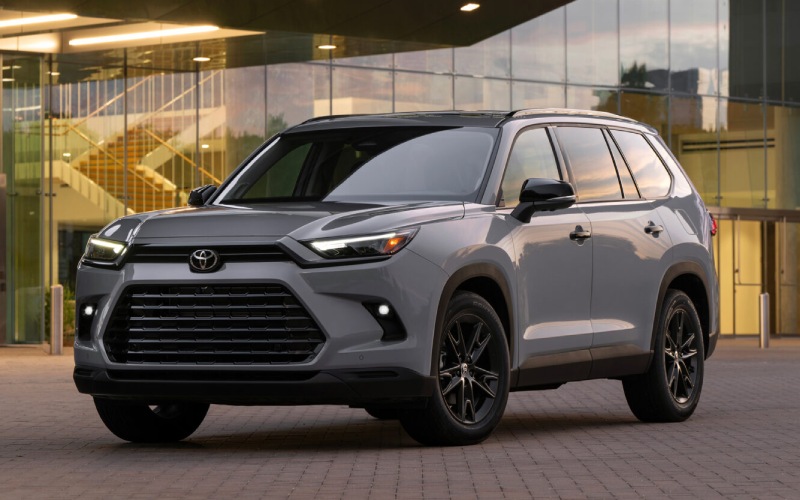
Toyota of Kirkland - Are Driver-Assistance Features Better on the 2026 Toyota Grand Highlander or the 2026 Chevrolet Traverse for Seattle, WA Commuters?
If you sit in stop-and-go traffic on I-5, squeeze into tight parking garages downtown, and navigate complex interchanges like SR-520 and I-405, advanced driver assistance can be as important as cargo room. So, which three-row SUV brings the smarter confidence to busy Seattle, WA driving — the Toyota Grand Highlander or the Chevrolet Traverse? Both pack helpful tech, but Toyota’s approach with Toyota Safety Sense 3.0 standard on every grade and thoughtful available aids like Traffic Jam Assist, a Panoramic View Monitor, and a Digital Rearview Mirror make a persuasive case for choosing the Grand Highlander.
Let’s start with what you get out of the box. The Grand Highlander includes Toyota Safety Sense 3.0 on all trims, so features such as Pre-Collision System with Pedestrian Detection, Lane Departure Alert with Steering Assist, Lane Tracing Assist, Road Sign Assist, and Full-Speed Range Dynamic Radar Cruise Control aren’t tied to an options package. That consistency matters when you’re comparing family vehicles because it ensures core protection without moving up multiple grades. Chevrolet equips the Traverse with Chevy Safety Assist and over 20 standard safety and driver assistance features, which is a solid foundation; however, certain flagship capabilities like Super Cruise hands-free driving are reserved for trims such as High Country and RS. If you prefer guaranteed coverage across the lineup, Toyota’s strategy shines.
Next, consider how these systems help during everyday Seattle traffic. The Grand Highlander’s available Traffic Jam Assist — when properly equipped and activated on controlled-access freeways — is designed to reduce driver workload in low-speed congestion. Combined with Lane Tracing Assist and Full-Speed Range Dynamic Radar Cruise Control, it helps the vehicle center in its lane and maintain following distance, which is especially useful on the slow crawl across the Ship Canal Bridge or during the morning squeeze by Mercer. Chevrolet’s Super Cruise excels on longer highway stretches where compatible mapping is available, and speed is steady; it’s a fantastic road-trip companion, but its benefits in urban stop-and-go are different from Toyota’s low-speed focus.
Parking and close-quarters navigation are another daily reality. The Grand Highlander’s available Panoramic View Monitor presents a 360-degree, stitched perspective around the vehicle, making it easier to judge curbs, pillars, and tight spaces in garages like Pacific Place or near South Lake Union. Pair that with the available Digital Rearview Mirror, and you can see past tall cargo or a third row filled with kids. The Traverse counters with available HD Surround Vision, which is also quite helpful, but its availability varies by trim and equipment. For families who routinely parallel park on neighborhood streets or back into short driveways, Toyota’s visibility stack can turn a tense moment into a routine task.
Usability in inclement weather and on varied road surfaces also matters. Both SUVs offer available all-wheel drive, and both are composed on wet pavement. The Traverse Z71 adds twin-clutch AWD and off-road-oriented hardware for those who plan occasional adventures on rougher forest roads. Yet for the majority of Seattle drivers whose “adventure” is a rain-soaked softball practice or a weekend Costco run, the Grand Highlander’s smooth, quiet ride and steady steering feel set the tone for calmer commutes. Importantly, Toyota’s driver assistance is there every day — not just on specific routes — which is exactly when you need it most.
Infotainment and driver interface support the safety tech, too. The Grand Highlander’s 12.3-in. Toyota Audio Multimedia system feels polished and straightforward, integrating wireless Apple CarPlay and Android Auto along with cloud-based navigation and a natural voice assistant. The Traverse’s 17.7-in. touch-screen is enormous and customizable, with Google built in for native navigation and apps; both systems are modern and capable. Still, Toyota’s clean menus and consistency across trims mean you can set it once and hand the vehicle off to different drivers in the household without a learning curve.
We also can’t overlook seating and third-row comfort, because safety starts with a good seating position. The Grand Highlander’s third row is exceptionally usable, offering a generous 33.5 inches of legroom and big-car space without the contortions some SUVs require. That matters if you’re carpooling older kids or shuttling co-workers to a lunch on the Eastside. The Traverse provides a flexible cabin, and certain trims add one-touch folding and even power-folding rows, but Toyota’s adult-ready third row makes it easier to keep everyone comfortable while the driver focuses on the road and the safety systems do their supporting work.
So, where does that leave your decision? If you prioritize driver-assistance tech that reduces fatigue in daily congestion, visibility tools that defuse tight urban parking, and standard safety coverage across the lineup, the Grand Highlander has the edge for Seattle, WA commutes. If you want the option for hands-free highway cruising on long road trips and a rugged-leaning trim for occasional trail stretches, the Traverse remains a compelling choice. For most Seattle-area households balancing dense traffic, steep neighborhood streets, and constant parking puzzles, Toyota’s well-rounded safety and assist features deliver more of what you’ll use every day.
- Highway support: Grand Highlander offers Lane Tracing Assist and Dynamic Radar Cruise Control standard, with available Traffic Jam Assist for low-speed congestion; Traverse offers Super Cruise on select trims for mapped, higher-speed hands-free travel.
- Close-quarters visibility: Grand Highlander’s available Panoramic View Monitor and Digital Rearview Mirror enhance awareness in tight garages; Traverse counters with available HD Surround Vision.
- Everyday consistency: Toyota Safety Sense 3.0 is standard on every Grand Highlander grade; Traverse safety content is strong, with the most advanced features concentrated on upper trims.
If you’d like help choosing features that match your commute and family routine, Toyota of Kirkland — serving Bellevue, Redmond, and Seattle — can walk you through driver-assistance options and set up a route that mirrors your real-world drive.
Frequently Asked Questions:
Does Traffic Jam Assist work on city streets?
Traffic Jam Assist is intended for controlled-access freeways in low-speed congestion where conditions allow. It is not designed for surface streets with intersections, pedestrians, and cross traffic.
How does Super Cruise differ from Toyota’s driver assistance?
Super Cruise enables hands-free driving on compatible, mapped highways under certain conditions and is ideal for long-distance travel. Toyota’s suite focuses on lane centering, adaptive cruise, and available low-speed assistance that reduces fatigue in heavy traffic, with operation requirements that differ from hands-free systems.
Will the surround-view cameras help with tight parking garages?
Yes. Both vehicles offer a multi-view camera system on select trims. The Grand Highlander’s Panoramic View Monitor and the Traverse’s HD Surround Vision display a 360-degree perspective to help you judge curbs, pillars, and neighboring vehicles.
Request more 2026 Toyota Grand Highlander information
Categories:
Toyota Grand Highlander