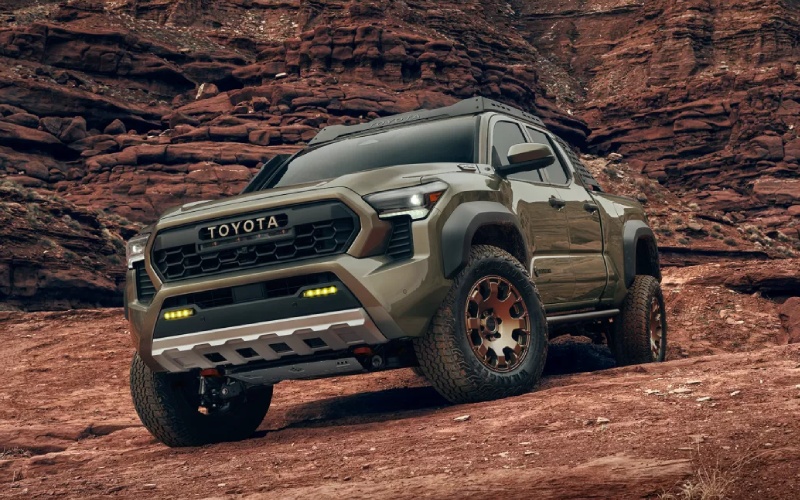
Toyota of Kirkland - Toyota Tacoma or GMC Canyon: Which truck has the better hybrid-or-gas advantage for everyday driving and weekend trails in Seattle, WA?
When midsize truck shoppers ask about daily drivability and weekend capability in the same breath, they are usually comparing the 2026 Toyota Tacoma’s available i-FORCE MAX hybrid to the 2026 GMC Canyon’s TurboMax gas engine. That’s a smart question in an area full of quick merges, ferry lines, and trailheads around Seattle, WA. The short version: both trucks are strong, but Tacoma’s hybrid-plus-hardware approach brings broader capability without losing the smooth composure you want for commuting or errands.
Under the hood, Tacoma’s available i-FORCE MAX turbocharged hybrid pairs an efficient gas engine with electric assist for up to 326 horsepower and a towering 465 lb-ft of torque. That matters when you need low-end punch to pull up a steep launch ramp, nose into a gap on I-5, or ease over a rutted climb with a kayak and camping bins in the bed. Canyon’s TurboMax replies with 310 hp and 430 lb-ft, and it’s lively — but it can’t match the instant torque and flexible character of Tacoma’s hybrid. Beyond the numbers, Tacoma layers in available SDM for extra front-end articulation, Crawl Control (CRAWL) to regulate low-speed traction, and a 3D Multi-Terrain Monitor to keep eyes on obstacles. Canyon answers with a standard lift, up to 3 inches on AT4X, selectable front and rear lockers on AT4X, and generously detailed camera views — especially helpful in tight brush. Still, the hybrid torque wall and Toyota’s trail tech come together in ways that make Tacoma feel calm, predictable, and composed on broken ground.
On the daily side of the ledger, Tacoma’s cabin tech tilts modern and intuitive: an available 14-in. touchscreen with wireless Apple CarPlay® and Android Auto, plus an available 12.3-in. digital gauge cluster that keeps driver-assist and trail pages in view. Canyon’s 11.3-in. center display and 11-in. driver display are crisp and well organized, with an available Head-Up Display on certain trims. Both trucks offer strong driver assistance, but Tacoma makes Toyota Safety Sense™ 3.0 standard across the lineup, and it integrates neatly with the available digital gauge cluster so alerts are consistent and glanceable. If you spend most of your week in stop-and-go traffic, Tacoma’s hybrid tuning and smooth 8-speed automatic take the edge off; on weekends, the same hardware helps you pick your way across washboard, roots, and rock steps without drama.
Shoppers also ask about versatility. Tacoma answers with more pathways to “your” truck. Choose an XtraCab with a 6-ft bed for maximum utility or a Double Cab for everyday flexibility. Consider the available 6-speed manual on select grades if you want a mechanical connection and precise control on steep grades. And for off-grid weekends, the available 2400W AC power supply and robust bed system are ready for real tools, inflators, and camp setups. Canyon is crew-cab only with a 5-ft bed, which simplifies the lineup but narrows the ways you can tailor it to your gear and crew.
If you’re mapping out the next five years — school drop-offs, Costco runs, trail work days, and two big trips into the Cascades — the differentiator is how a truck behaves in the in-between moments. Tacoma’s hybrid torque and trail-first chassis tech help it feel unflustered at low speeds and decisive when it’s time to go. Canyon is absolutely capable, especially in AT4X form, but the lack of a hybrid option and manual transmission removes two compelling “fit-it-to-you” choices that many Pacific Northwest drivers appreciate.
To find your answer in the real world, plan a sequence of drives that mirrors your life: a cold start and quick merge, a downtown parking maneuver, a lumpy gravel detour to a trail, and a short tow to the launch. Pay attention to throttle response, low-speed traction, and how information — cameras, alerts, and gauges — surfaces when you need it most. You’ll feel where Tacoma’s hybrid and trail systems make a difference.
- Everyday drivability: Tacoma’s available hybrid torque and smooth 8-speed automatic make city and highway transitions seamless.
- Trail hardware: SDM articulation, CRAWL, and a 3D Multi-Terrain Monitor help you move more precisely on broken terrain.
- Cabin tech: An available 14-in. screen and 12.3-in. cluster keep maps, camera views, and driver assists easy to read.
Frequently Asked Questions:
Does Tacoma’s available hybrid feel different than Canyon’s gas turbo in traffic?
Yes — Tacoma’s i-FORCE MAX hybrid serves up immediate torque that helps with quick gaps, tight left turns, and ferry-line starts. Canyon’s TurboMax is responsive, but the hybrid’s low-end surge is the standout for urban errands and short on-ramps.
Which truck gives more off-road control at low speeds?
Tacoma. With available SDM to free up front suspension articulation and Crawl Control (CRAWL) to regulate throttle and braking over obstacles, it’s easier to maintain steady progress. Canyon’s lockers on AT4X are excellent for traction, but the Tacoma’s integrated systems make technical terrain feel more methodical.
How do the interiors compare for daily tech?
Both are modern and connected. Tacoma’s available 14-in. touchscreen and 12.3-in. gauge cluster provide larger, more flexible canvases for maps, camera views, and driver-assist info. Canyon’s 11.3-in. screen is sharp, and an available Head-Up Display on certain trims is handy, but Tacoma’s bigger displays reduce glance time on bumpy city streets.
If you’re cross-shopping, schedule a back-to-back drive and bring your real gear. One route, two trucks, no guessing — that’s how confident decisions get made. Toyota of Kirkland — serving Bellevue, Redmond, and Seattle — is happy to set up a route that includes a little of everything so you can feel the differences where it counts.
Request more 2026 Toyota Tacoma information
Categories:
Toyota Tacoma